
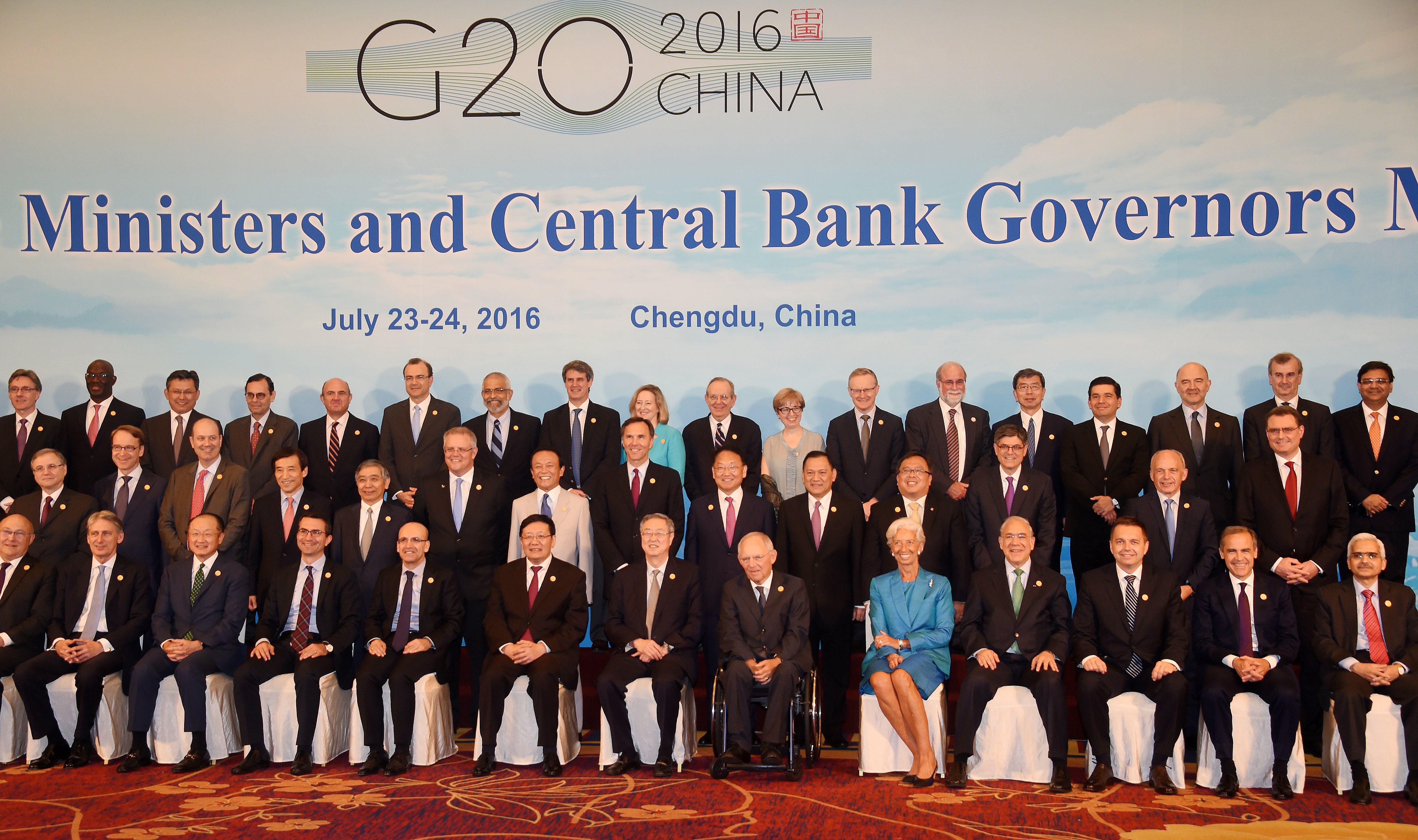
[뉴스핌=이고은 기자] 주요 20개국(G20) 재무장관들이 24일(현지시각) 중국 청두에서 브렉시트(영국의 유로존 탈퇴) 파장을 최소화하기 위한 'G20 재무장관회의 및 중앙은행총재 회담 공동선언문(코뮤니케)'을 채택했다.
이들은 브렉시트 이후 처음 열린 G20 재무장관 회의에서 증가한 하방압력에 대응하기 위해 가용한 거시정책을 총동원하자는 데 뜻을 모았다. 23~24일 열린 이번 회의는 오는 9월 G20 정상회의를 앞두고 그간의 성과물을 최종적으로 점검한 자리다.
G20 재무장관들은 균형 있는 성장 달성을 위해서는 통화정책만으로는 어려우며, 적극적 재정정책이 중요하다는 데 의견을 같이했다. 또 보호무역주의를 배격하고 회원국들이 경쟁적 통화 절하 대신 적극적인 재정정책으로 글로벌 수요를 진작시켜야 한다고 강조했다.
다음은 G20 공동선언문(코뮤니케) 전문이다.
◆ G20 재무장관·중앙은행 총재 회의 공동선언문(코뮤니케)
1. 우리는 주요 경제적 도전과제에 대한 우리의 대응 노력과 올해 우리가 이룩한 진전 상황을 점검하기 위하여 청두에서 만났다. 우리는 협력과 연대의 정신으로 긴밀히 협업하며 우리의 의제에 대하여 구체적인 성과를 도출하였으며, 이러한 성과는 항저우 정상회담에서 정상에게 보고될 것이다.
2. 세계 경제 회복이 지속되고 있지만 회복세는 기대에 미치지 못하고 있다. 또한 포용성의 증진을 위해 성장의 혜택은 국가 내에서, 그리고 국가들간에 더 광범위하게 공유되어야 한다. 세계 경제 환경은 많은 도전과제를 안고 있고, 원자재 가격의 변동, 저물가 등의 하방 위험은 지속되고 있다. 금융 시장 변동성은 여전히 높고, 지정학적 갈등과 테러, 난민 유입은 지속적으로 세계 경제 환경에 복잡성을 더하고 있다. 이에 더하여 영국의 유럽연합 탈퇴 국민 투표 결과는 세계 경제에 불확실성을 높이고 있다. G20 회원국들은 영국 국민투표 결과가 야기하는 경제 및 금융 문제에 선제적으로 대응할 수 있는 적절한 위치에 있다. 우리는 미래에 영국이 유럽연합의 긴밀한 파트너로 남아있기를 희망한다.
3. 우리는 경제에 대한 신뢰를 제고하고 성장을 뒷받침하기 위한 조치를 취하고 있다. 최근 경제상황을 감안하여, 우리는 강하고 지속가능하며 균형 잡힌 포용적 성장이라는 우리의 목표를 달성하기 위해 각국에서 그리고 집단적으로 통화, 재정, 구조개혁 등 가용한 모든 정책 수단을 사용한다는 우리의 다짐을 재확인한다. 통화정책은 중앙은행의 권한내에서 지속적으로 경제 활동을 뒷받침하고 물가를 안정시키는 역할을 할 것이다. 하지만 통화정책만으로는 균형 잡힌 성장을 이루어낼 수 없다. 구조개혁의 중요성과 함께, 우리는 재정 전략 또한 공동 성장 목표를 뒷받침하는데 중요하다는 점을 강조한다. 우리는 경제의 회복력을 높이고 GDP 대비 부채 비율을 지속가능한 수준으로 유지함과 동시에, 재정정책을 유연하게 집행하고 양질의 투자를 우선시 하는 등 조세 정책과 공공 지출을 보다 성장 친화적인 방향으로 이끌고 있다. 뿐만 아니라, 우리는 G20 국가들이 취약한 부채 구조 등의 잠재적 위험에 대응하고 성장을 뒷받침하는데 필요하며 각국의 상황에 맞는 정책 수단을 지속적으로 강구할 것이다. 우리는 환율의 과도한 변동성과 무질서한 움직임이 경제와 금융 안정성에 악영향을 줄 수 있다는 점을 재확인한다. 우리는 외환 시장과 긴밀히 논의할 것이다. 우리는 경쟁적인 환율 절하를 지양하고 경쟁적인 목적으로 환율을 조작하지 않는다는 등의 우리의 기존 환율 관련 합의를 재확인한다. 우리는 모든 종류의 보호주의를 배격한다. 우리는 정책과 관련한 불확실성을 줄이고 부정적인 파급효과를 최소화하며 투명성을 제고하기 위해 거시 경제와 구조개혁 정책을 신중하게 조정하고 분명하게 소통할 것이다.
4. 구조개혁과 관련하여 우리는 거시공조실무그룹의 강화된 구조개혁 의제를 승인하며 OECD와 IMF 등 국제기구들의 소중한 조언에 감사한다. 우리는 구조개혁의 선택과 설계가 국가들의 경제 상황에 부합한다는 점에 주목한다. 4월에 합의된 구조개혁의 9개의 우선 분야에 기초하여 우리는 추진 원칙들을 개발하고 이에 합의했다. 해당 원칙은 국가들이 각국의 특수한 상황을 고려하면서 이용할 수 있는 높은 수준의 유용한 지침이 될 것이다. 우리는 또한 구조개혁과 도전과제에 대한 우리의 노력과 성과에 대한 모니터링과 평가를 돕기 위해 앞으로 더 강화될 평가 지표들에 합의했다. 우리는 강화된 구조개혁 의제를 이행하고 계속 발전시켜나갈 것을 약속하며 국제기구의 지속적인 지원을 요청한다. 우리는 우리의 강화된 상호평가와 국제기구 예비평가에서 나타난 바와 같이 성장전략 이행에 진전을 이루어내고 있지만 보다 더 많은 노력이 필요하다. 성장전략의 빠르고 완전한 이행은 경제 성장과 브리스번 정상회담에서 설정한 공동 경제 성장 목표를 뒷받침하는데 여전히 핵심으로 남아있다. 뿐만 아니라, 우리의 노력을 강화하기 위해 우리는 신규 및 조정된 거시 경제정책과 구조개혁정책 방안을 포함시키기 위해 우리의 성장전략을 업데이트 하고 있다. 이 방안들은 성장에 상호 보조적 혜택을 제공할 수 있다. 우리의 업데이트된 성장전략과 성장 목표를 향한 진전에 대한 이행평가보고서는 항저우 정상회담 전에 완성될 것이다. 우리는 포용적 세계 경제 성장을 제고하기 위한 무역 개방 정책과 강하고 안정된 세계 무역 체제의 역할을 강조한다. 우리는 세계무역과 투자를 활성화하기 위해 더 노력할 것이다. 우리는 또한 경제 성장을 추구함에 있어서 과도한 불균형을 줄이고 우리의 경제성장 추진에 있어 포용성의 증진을 위해 노력할 것이다.
5. 우리는 일부 산업의 과잉설비를 포함한 구조적 문제가 미약한 세계 경제 회복세와 시장 수요 위축으로 인해 악화되어 무역과 노동자에게 부정적 영향을 끼쳤음을 인지한다. 우리는 철강 등 일부 산업의 과잉설비가 공동의 대응을 요하는 세계적인 이슈임을 인지한다. 우리는 정부나 정부 지원 기관의 보조금 및 다른 형태의 지원이 시장을 왜곡하고고 세계적인 과잉설비를 야기할 수 있으며 따라서 우리의 주의가 필요함을 인지한다. 우리는 시장의 기능을 강화하고 조정을 촉진하기 위해 소통과 협력을 강화하고 이러한 도전과제를 해결하기 위한 효과적인 조치를 취할 것을 약속한다. G20의 철강 생산국은 2016년 9월 8~9일에 개최되는 OECD 철강 위원회 회의에 참여하고 세계적 설비능력의 변화와 이에 대한 정부의 정책과 지원 방안에 대한 소통과 정보공유를 위한 협력 플랫폼으로서 글로벌 포럼을 설립하는 것의 타당성을 논의하는 등의, 과잉설비를 해결하기 위한 국제사회의 행동에 참여할 것이다.
6. 우리의 공동 성장 목표와 지속 가능한 개발을 위한 2030 의제를 뒷받침하기 위해 우리는 양적, 질적 측면에서 인프라에 초점을 맞추어 투자를 촉진하겠다는 우리의 약속을 재확인한다. 다자개발은행은 인프라 투자를 지원하는 데 특별한 역할을 수행한다. 우리는 다자개발은행과 효과적인 논의를 진행했고 다자개발은행이 민간 투자를 촉진하고 인프라 투자를 지원하기 위해 공동의 행동을 취할 것을 요청했다. 이러한 측면에서 우리는 11개 다자개발은행이 약속한 '인프라 투자를 지원하기 위한 행동을 위한 공동선언문'을 환영한다. 선언문은 양질의 인프라 프로젝트를 위한 각 기관의 임무 내에서의 양적 목표 선언과, 인프라 프로젝트의 질 극대화를 위한 노력, 프로젝트 파이프라인의 강화, 기존의 다자개발은행과 신규 다자개발은행 간의 협업 촉진, 개도국 인프라 투자를 위한 환경 강화와 민간 투자 활성화를 위한 다자개발은행의 노력을 포함하고 있다. 우리는 사회 및 환경적 영향을 해결하고 경제 및 개발 전략에 맞추며 생애주기적 비용과 안전, 자연재해에 대한 회복력과 일자리 창출, 역량 제고, 기술과 노하우 전수 측면에서 경제적 효율성을 보장하는데 초점을 맞추는 양질의 인프라 투자의 중요성을 강조한다. 우리는 '다자개발은행 재원 활용 최적화를 위한 액션 플랜에 대한 다자개발은행들의 대응'을 환영하며 해당 행동 계획의 추가적인 이행을 요청한다. 증진된 연결성은 21세기 세계 경제의 중대한 요구이며, 지속 가능한 개발과 공동 번영을 추구하기 위한 핵심이다. 우리는 다양한 인프라 연결 프로그램 간의 협력과 시너지를 전반적으로 증대시키기 위해 '글로벌 인프라 연계 동맹'을 출범한다. 우리는 세계은행그룹이 동맹의 사무국으로서 동맹의 활동을 지원하기 위해 GIH와 OECD 및 여타 다자개발은행, 그리고 관심을 가지고 있는 G20 회원국과 긴밀히 협업할 것을 요청한다. 우리는 G20과 OECD가 만든 인프라 투자와 중소기업의 재원조달 관련 '금융수단 다양화를 위한 정책지침서'를 승인하며 GIH가 개도국의 인프라 위험 평가를 돕기 위해 만든 '민관협력사업의 위험배분 매트릭스'를 환영한다. 우리는 G20과 OECD의 '기업지배구조 원칙'과 '중소기업금융을 위한 상위원칙'의 효과적인 이행을 지지한다. 특히, 우리는 기업지배구조에 대한 FSB의 상호평가에 의해 정보를 제공받아 G20과 OECD의 “기업지배구조 원칙”의 평가 방식을 개정하기를 기대한다.
7. 우리는 세계은행을 포함한 국제기구들이, 각각의 임무와 비교우위에 맞추고 기존에 있던 작업과 새로이 제안된 작업에 기반하여, 난민과 모든 지역과 소득 수준의 개도국과 중소득 국가에 있는 난민 수용 지역사회에 대한 효과적이고 조율된 지원을 위해 수행하고 있는 대응 노력을 지지한다. 우리는 세계은행그룹의 글로벌 위기 대응 플랫폼 설립 검토 등을 통해 머지않아 추가적인 진전을 이룰 수 있기를 기대한다. 우리는 난민 정착을 위한 인도적 지원 및 개발 지원 강화와 관련 국제기구를 통한 난민과 난민 수용 지역사회에 대한 지원을 확대할 것을 요청한다.
8. 우리는 국제금융체제 실무그룹에서 국제금융체제를 더욱 강화하기 위해 마련한 권고안을 지지한다. 우리는 관련 국제기구들이 진행중인 작업을 기반으로 자본흐름 분석 및 모니터링을 개선하고 과도한 자본흐름 변동성으로부터 야기되는 리스크를 지속적으로 관리할 것이다. 우리는 자본흐름 관리와 관련하여 금년 말까지 완료예정인 IMF의 각국 사례 및 새로운 이슈 분석을 기대한다. 또한 현재 진행중인 OECD의 자본자유화 규약 검토에 주목한다. 우리는 보다 효과적인 IMF 지원제도를 갖추고, 각 지역금융안전망의 권한을 존중하는 가운데 IMF와 지역금융안전망 간 보다 효과적인 협력을 도모하는, 강하고 쿼터 기반의 적절한 재원을 갖춘 IMF가 중심에 있는 글로벌 금융안전망의 추가적인 강화 작업을 지지한다. 이와 관련하여 우리는 CMIM과 IMF의 공동 시범운영을 환영하며 IMF의 지원제도에 대한 추가적인 작업을 요청한다. 우리는 새로운 쿼터 공식을 포함한 제15차 쿼터 검토가 2017년 연차 총회까지 완료될 것을 기대한다. 우리는 제15차 쿼터 검토 시 모든 쿼터 지분 조정은 세계경제에서의 상대적 비중에 맞추어 역동적인 국가들의 지분비율 증가로 이루어져야 하며, 이로 인해 신흥국과 개발도상국의 총 지분이 증가해야 함을 재확인한다. 우리는 향후 공정한 투표권을 달성하기 위한 목적을 가진 세계은행의 지분검토를 합의된 로드맵과 시간계획에 따라 이행할 것을 지지한다. 우리는 건전하고 지속가능한 재정운영의 중요성을 강조하며 채무재조정 절차를 지속적으로 개선할 것이다. 우리는 강화된 채권채무계약 조항을 국가 발행채권에 적용하려는 지속된 노력을 지지한다. 우리는 국가채무와 관련된 여러 문제에 대한 파리클럽의 논의를 지지한다. 우리는 공식 채무 재조정을 위한 주요 국제 포럼으로서 신흥 채권국의 참여를 위한 파리클럽의 노력을 지원하며, 한국의 파리클럽 가입을 환영한다. 우리는 중국의 정기적 파리클럽 참여와 잠재 가입 여부에 대한 추가적 논의 등 더 건설적인 역할을 하려는 중국의 의도를 환영한다. 우리는 회복력 강화를 위한 노력의 일환으로 IMF 특별인출권으로 표시된 계정 및 통계 발표의 확대, IMF 특별인출권으로 표시된 채권의 잠재적 발행 등 IMF 특별인출권의 보다 광범위한 활용 방안 검토를 지지한다. 우리는 저소득국가 지원 강화 등 자국통화 표시 채권시장의 발전을 위한 국제기구의 추가적인 노력을 요청한다. 우리는 국제금융체제 실무그룹의 권한을 2017년까지 연장할 것이다.
9. 최근 시장불안과 불확실성은 개방되고 회복력있는 금융체제 구축의 중요성을 다시 한 번 강조하였다. 이를 위해 우리는 잔여 규제체계 핵심기준의 마무리와 바젤 III, 손실흡수능력(TLAC) 기준, 효과적인 국경간 정리 체계 등 합의된 금융규제 개혁안의 시의적절하고 완전하며 일관된 이행을 계속 확인한다. 또한, 바젤 은행감독위원회(BCBS)가 공정한 경쟁의 장을 증진하면서 은행부문 자본요건을 추가로 크게 증대하지 않고 2016년 말까지 바젤 III 세부기준 조정 작업을 완료하는 것에 대한 지지를 재확인한다. 우리는 동 체계의 최종 설계와 조정 작업에 영향을 미칠 BCBS의 포괄적 정량적 영향평가를 기대한다. 우리는 의도치 않은 결과에 대한 대응을 포함하여 우리의 전반적인 목표와의 일관성을 담보하기 위해 개혁의 이행과 효과를 지속 모니터링 할 것이다. 우리는 항저우 정상회의에 보고될 금융규제 개혁의 이행과 효과에 대한 FSB의 2차 연례 보고서를 기대한다. 우리는 계속해서 보험 분야 내의 시스템 리스크 이슈를 다룰 것이다. 우리는 국제적으로 활동적인 보험사에 대한 보험사 자본 기준(Insurance Capital Standard) 마련 노력을 환영한다. 또한, 효과적인 거시건전성 정책 개선 지원을 위한 IMF, FSB, BIS의 거시건전성 체계 및 수단에 대한 국제 경험 수집 공동 작업을 환영하며, 항저우 정상회의 전에 발간될 동 보고서를 기대한다. 우리는 FSB의 자산운용업 구조적 취약성 대응을 위한 정책 권고안을 환영한다. 우리는 그림자 금융, 자산운용업 및 기타 시장기반 금융과 관련한 금융 시스템의 새로운 위험요인과 취약성을 지속하여 유심히 모니터링하고 필요시 대응할 것이다. 우리는 외국환업무 축소에 적절히 대응하기 위한 FSB의 4대 중점 액션 플랜(FSB-coordinated four-point action plan) 진척사항이 항저우 정상회의에 보고될 것을 기대한다. G20은 10월 FATF의 외국환업무에 대한 지침을 고려하여 규제 기대를 명확히 하기 위한 추가적 노력을 할 것을 기대한다. 우리는 G20 회원국, IMF, World Bank에 모든 국가가 글로벌 자금세탁 및 테러자금조달 방지와 건전성 기준을 준수하기 위한 국내역량배양 지원을 강화할 것을 요청한다. 우리는 금융시장인프라 원칙 이행 격차를 해소하고 장외파생상품시장 개혁 이행을 촉진할 것을 장려한다. 우리는 항저우 정상회의까지 중앙청산소의 건전성, 회생계획 및 정리가능성에 대한 합의된 작업 계획 하에 마련된 자문 보고서의 발간을 기대한다. 우리는 금융소외계층 포용 파트너십(GPFI)가 마련한 디지털 금융 포용을 위한 G20 상위원칙, G20 금융 포용성 지표 갱신 자료 및 G20 중소기업 금융 액션플랜의 이행 체계를 승인한다. 우리는 국가들이 특히 디지털 금융 포용과 관련하여 더 광범위한 금융 포용 계획을 마련할 때에 동 원칙들을 고려할 것을 장려한다.
10. 우리는 교토에서 열린 제1차 G20/OECD의 BEPS 포괄적 이행체제와, 특히 시의적절하고 일관되며 광범위한 BEPS 대응방안 이행과 개발도상국이 직면한 구체적인 도전과제를 해결함에 있어 중요한 자산인 회원국 확대를 환영한다. 우리는 아직 BEPS 대응방안에 동참하지 않은 관련있고 관심있는 모든 국가 및 관할권에 동 체제에 동등하게 참여할 것을 요청한다. 또한 조세투명성에 대한 국제적으로 합의된 기준의 효과적이고 광범위한 이행과 관련한 최근의 진전사항을 환영한다. 우리는 아직 동참하지 않은 모든 금융중심지와 관할권 등 모든 관련있는 국가에 늦어도 2018년까지 조세정보 자동교환(AEOI) 기준의 지체없는 이행을 약속하고 다자간 조세행정공조 협약(Multilateral Convention on Mutual Administrative Assistance in Tax Matters)을 체결 할 것을 요청한다. 우리는 글로벌 포럼의 조세정보 자동교환 이행 모니터링을 지지하며 금년 말까지 관련 보고서를 마련할 것을 기대한다. 우리는 조세 투명성과 관련하여 OECD와 G20과 협력하여 제안한 객관적인 비협조국 식별 기준을 승인한다. 우리는 OECD에 조세투명성에 대한 각 관할권의 진전사항과, OECD가 2017년 7월 G20 정상회의까지 조세투명성에 대해 합의된 국제기준 이행 수준이 불충분한 관할권에 대한 목록을 준비하는 목적으로, 추가 검토 요청에 따른 글로벌포럼의 국가검토절차 관리방안을 2017년 6월까지 보고할 것을 요청한다. 목록에 포함된 관할권에 대해 방어적 조치를 고려할 것이다. 우리는 개발도상국의 조세 역량배양을 위한 국가 및 국제기구의 지원을 장려하며 이에 따라 IMF, OECD, UN, WBG의 새로운 조세 협력 플랫폼 설립과 조세개혁 지원을 위한 효과적인 기술 지원 메커니즘에 대한 조언을 인지한다. 우리는 이에 대한 진전사항을 2017년 중반까지 보고받을 것을 기대한다. 우리는 아디스 조세 이니셔티브 원칙을 지지한다. 또한 불법자금흐름이 우리 경제에 미치는 상당히 유해한 효과를 인식하며, 이 주제에 대한 G20의 노력을 앞으로도 이끌어 나갈 것이다.
11. 우리는 강하고 지속가능한 균형 성장이라는 포괄적인 의제에서의 조세정책의 중요한 역할과 조세 시스템간의 충돌 감소를 위한 공평하고 효율적인 국제 조세 환경의 중요성을 인식한다. G20 고위급 조세 심포지엄 논의에서 강조된 바와 같이 우리는 투자 및 성장 촉진을 위한 조세 확실성의 혜택은 물론 혁신 주도적 포용 성장 증진을 위한 공급 측면의 구조개혁을 위한 조세정책의 유효성을 강조한다. 이와 관련하여, 우리는 OECD와 IMF에 성장 친화적인 조세 정책과 조세 확실성에 대한 작업을 지속할 것을 요청한다.
12. 우리는 자금세탁방지기구(FATF)와 글로벌 포럼에 10월 회의까지 법인과 법률관계 실소유자 정보의 가용성과 국제 교환을 포함 투명성에 대한 국제 기준 이행 개선방안 첫 제안서를 마련하라는 우리의 요청을 재확인한다.
13. 우리는 최근 일련의 테러공격을 가능한 한 가장 강력하게 규탄한다. 우리는 어디에서 발생하든 모든 형태의 테러에 대한 우리의 결속력과 의지를 재표명한다. 우리는 테러금융의 모든 원천, 기술, 자금조달경로와 맞서 싸울 것이다. 우리는 테러자금조달 종합 대응전략 이행 관련 자금세탁방지기구의 진전을 환영하며 전략별 세부 실행계획의 효과적인 이행을 촉구한다. FATF 기준의 신속하고 효과적인 전세계적 이행은 우리의 우선순위이다. 이는 FATF의 견인(traction) 역량 강화와 FATF와 FATF 지역기구의 네트워크의 효과성 개선이 요구된다. 우리는 FATF에 2017년 3월까지 언급된 분야에서의 진전 방안을 반영할 것을 요청한다.
14. 우리는 세계적으로 환경적 측면에서 지속가능한 성장을 도모하기 위해서는 녹색금융 강화가 필수적임을 인식한다. 우리는 녹색금융 스터디그룹(GFSG)이 제출한 G20 녹색금융종합보고서를 환영하며 GFSG가 녹색투자에 대한 민간자본 유입 확대를 위한 금융체제의 역량 강화 목적의 자발적 대안 마련을 환영한다. 특히 명확한 전략적 정책 신호와 체계 제공, 녹색금융을 위한 자발적 원칙 도모, 역량배양을 위한 학습 네트워크 확대, 현지녹색채권시장 개발 지원, 국경간 녹색채권 투자 촉진을 위한 국제 협력 도모, 환경 및 금융 리스크에 대한 지식 공유 장려와 녹색금융활동 및 이에 따른 영향 측정 향상에 대한 노력의 유효성을 믿는다.
15. 우리는 기후변화에 대한 파리협정을 빠른 시일 내에 발효하기 위해 일부 국가에서 이미 취한 국내 조치를 환영하며 다른 국가도 이에 동참할 것을 장려한다. 우리는 기후변화에 대한 파리협정과 선진국 및 국제기구의 공약과 기후재원에 대한 다른 국가들의 발표의 신속한 이행 요청을 재확인한다. 우리는 기후재원스터디그룹(CFSG)이 제출한 “야심적인 감축 및 적응 조치 강화를 위한 효율적이며 투명한 기후재원 조성 및 제공”에 대한 보고서를 환영하며 “개발지원 및 기후재원 프로그램에서의 기후변화에 대한 고려 주류화”에 대한 관점(Outlook)에 주목한다. 우리는 내년 G20 의장국의 업무계획 하에 유엔 기후변화협약(UNFCCC) 논의에 기여하는 목적으로 G20의 관련 전문성, 지식, 경험 공유를 기반으로 다른 회원국과의 협의를 통해 2017년에도 기후재원 분야에서의 작업을 지속할 것이다.
16. 우리는 빈곤층에 대한 지원의 필요성을 인식하며 낭비적인 소비를 조장하는 비효율적인 화석연료 보조금을 중기적으로 합리화하고 단계적으로 폐지하기로 한 우리의 약속을 재확인한다. 이에 더해 우리는 모든 G20 국가가 낭비적인 소모를 조장하는 비효율적인 화석연료 보조금에 대한 자발적 상호검토에 참여할 것을 장려한다.
(위 코뮤니케 전문은 기획재정부 보도 참고자료 중 G20 재무장관․중앙은행총재 회의 코뮤니케 (비공식 번역본)를 수록한 것임)
1.We met in Chengdu to review our efforts in responding to key economic challenges, as well as the progress we made since the beginning of this year. We worked closely in the spirit of cooperation and solidarity and achieved tangible outcomes on our agenda, which will be delivered for our Leaders’ review at their Hangzhou Summit.
2.The global economic recovery continues but remains weaker than desirable. Meanwhile, the benefits of growth need to be shared more broadly within and among countries to promote inclusiveness. The global economic environment is challenging and downside risks persist, highlighted by fluctuating commodity prices, and low inflation in many economies. Financial market volatility remains high, and geopolitical conflicts, terrorism, and refugee flows continue to complicate the global economic environment. In addition, the outcome of the referendum on the UK’s membership of the EU adds to the uncertainty in the global economy. Members of the G20 are well positioned to proactively address the potential economic and financial consequences stemming from the UK referendum. In the future, we hope to see the UK as a close partner of the EU.
3.We are taking actions to foster confidence and support growth. In light of recent developments, we reiterate our determination to use all policy tools – monetary, fiscal and structural – individually and collectively to achieve our goal of strong, sustainable, balanced and inclusive growth. Monetary policy will continue to support economic activity and ensure price stability, consistent with central banks’ mandates, but monetary policy alone cannot lead to balanced growth. Underscoring the essential role of structural reforms, we emphasize that our fiscal strategies are equally important to support our common growth objectives. We are using fiscal policy flexibly and making tax policy and public expenditure more growth-friendly, including by prioritizing high-quality investment, while enhancing resilience and ensuring debt as a share of GDP is on a sustainable path. Furthermore, we will continue to explore policy options, tailored to country circumstances, that the G20 countries may undertake as necessary to support growth and respond to potential risks including balance sheet vulnerability. We reiterate that excess volatility and disorderly movements in exchange rates can have adverse implications for economic and financial stability. We will consult closely on exchange markets. We reaffirm our previous exchange rate commitments, including that we will refrain from competitive devaluations and we will not target our exchange rates for competitive purposes. We will resist all forms of protectionism. We will carefully calibrate and clearly communicate our macroeconomic and structural policy actions to reduce policy uncertainty, minimize negative spillovers and promote transparency.
4.As regards structural reform, we endorse the Enhanced Structural Reform Agenda prepared by the Framework Working Group (FWG), and commend the OECD, the IMF and other relevant international organizations (IOs) for their valuable inputs. We take note that the choice and design of structural reforms are consistent with countries’ economic conditions. Based on the nine priority areas of structural reforms agreed in April, we have developed and agreed upon a set of guiding principles, which will provide high-level and useful guidance to members, while allowing them to account for their specific national circumstances. We have also agreed upon a set of indicators which will be further enhanced over time to help monitor and assess our efforts and progress with structural reforms and challenges. We are committed to implementing and improving over time the Enhanced Structural Reform Agenda, and call on the IOs to provide continuous support. We are making further progress towards the implementation of our growth strategies, as is indicated by the preliminary assessment of the IOs as well as results from our enhanced peer reviews, but much more needs to be done. Swift and full implementation of the growth strategies remains key to support economic growth and the collective growth ambition set by the Brisbane Summit. Furthermore, to strengthen our efforts, we are updating our growth strategies to include new and adjusted macroeconomic and structural policy measures that can provide mutually-supportive benefits to growth. Our updated growth strategies and an accountability report on progress against our growth ambition will be finalized before the Hangzhou Summit. We underscore the role of open trade policies and a strong and secure global trading system in promoting inclusive global economic growth, and we will make further efforts to revitalize global trade and lift investment. We will also strive to reduce excessive imbalances and promote greater inclusiveness in our pursuit of economic growth.
5.We recognize that the structural problems, including excess capacity in some industries, exacerbated by a weak global economic recovery and depressed market demand, have caused a negative impact on trade and workers. We recognize that excess capacity in steel and other industries is a global issue which requires collective responses. We also recognize that subsidies and other types of support from governments or government-sponsored institutions can cause market distortions and contribute to global excess capacity and therefore require attention. We commit to enhance communication and cooperation, and take effective steps to address the challenges so as to enhance market function and encourage adjustment. The G20 steelmaking economies will participate in the global community’s actions to address global excess capacity, including by participating in the OECD Steel Committee meeting scheduled for September 8-9, 2016 and discussing the feasibility of forming a Global Forum as a cooperative platform for dialogue and information sharing on global capacity developments and on policies and support measures taken by governments.
6.To support our common growth objectives and the 2030 Agenda for Sustainable Development, we reaffirm our commitment to promote investment with focus on infrastructure in terms of both quantity and quality. Multilateral Development Banks (MDBs) have a unique role in supporting infrastructure investment. We have had effective communications with MDBs and called on them to take joint actions to support infrastructure investment as well as catalyze private investment. In this regard, we welcome the commitments made in the “Joint Declaration of Aspirations on Actions to Support Infrastructure Investment” by 11 MDBs which includes their announcements of quantitative ambitions for high-quality infrastructure projects within their respective institutional mandates as well as their efforts to maximize the quality of infrastructure projects, strengthen project pipelines, collaborate further among existing and new MDBs, strengthen the enabling environment for infrastructure investment in developing countries, as well as catalyze private resources. We stress the importance of quality infrastructure investment, which aims to ensure economic efficiency in view of life-cycle cost, safety, resilience against natural disaster, job creation, capacity building, and transfer of expertise and know-how, while addressing social and environmental impacts and aligning with economic and development strategies. We welcome the MDB Response to the G20 MDB Balance Sheet Optimization Action Plan and call for further implementation of the Action Plan. Greater inter-connectivity is a defining demand of the 21st century global economy and key to promote sustainable development and shared prosperity. We launch the Global Infrastructure Connectivity Alliance to enhance the synergy and cooperation among various infrastructure connectivity programs in a holistic way. We ask the World Bank Group (WBG) to serve as the secretariat of the Alliance, working closely with the Global Infrastructure Hub (GIH), OECD, other MDBs, and interested G20 members to support its activities. We endorse the G20/OECD Guidance Note on Diversification of Financial Instruments for Infrastructure and SMEs and we welcome the Annotated Public-Private Partnership (PPP) Risk Allocation Matrices completed by the GIH to help developing countries better assess infrastructure risks. We support the effective implementation of the G20/OECD Principles of Corporate Governance and G20/OECD High-level Principles on SME Financing. In particular, we look forward to the revision of the assessment methodology of the G20/OECD Principles of the Corporate Governance, which will be informed by an FSB peer review on corporate governance.
7.We support the ongoing efforts undertaken by IOs to provide a coordinated and effective response that will support refugees and their host communities in developing and middle-income countries across all regions and income levels, building on existing and proposed facilities, and consistent with their mandates and comparative advantages. We look forward to further steps in the near future. We note the ongoing discussion within the WBG on considering a global crisis response platform. We call for strengthening humanitarian and development assistance, refugee resettlement and scaling up the support through relevant IOs for refugees and their host communities.
8.We endorse the recommendations towards further strengthening the international financial architecture (IFA) developed by the IFA Working Group. Building on the ongoing work by relevant IOs, we will continue to improve the analysis and monitoring of capital flows and management of risks stemming from excessive capital flow volatility. We look forward to the IMF’s review of country experiences and emerging issues in handling capital flows by year-end. We note the ongoing work on the review of the OECD Code of Liberalization of Capital Movements. We support work to further strengthen the Global Financial Safety Net (GFSN), with a strong, quota-based and adequately resourced IMF at its center, equipped with a more effective toolkit, and with more effective cooperation between the IMF and Regional Financing Arrangements (RFAs), respecting their mandates. In this respect, we welcome the upcoming CMIM-IMF joint test run and call for further work regarding the IMF’s lending toolkit. We look forward to the completion of the 15th General Review of Quotas, including a new quota formula, by the 2017 Annual Meetings. We reaffirm that any realignment under the 15th review in quota shares is expected to result in increased shares for dynamic economies in line with their relative positions in the world economy, and hence likely in the share of emerging market and developing countries as a whole. We support the WBG to implement its shareholding review according to the agreed roadmap and timeframe, with the objective of achieving equitable voting power over time. We underline the importance of promoting sound and sustainable financing practices and will continue to improve debt restructuring processes. We support the continued effort to incorporate the enhanced contractual clauses into sovereign bonds. We support the Paris Club’s discussion of a range of sovereign debt issues, the ongoing work of the Paris Club, as the principal international forum for restructuring official bilateral debt, towards the broader inclusion of emerging creditors, and welcome the admission of the Republic of Korea to the Paris Club. We welcome China’s regular participation in Paris Club meetings and intention to play a more constructive role, including further discussions on potential membership. We support examination of the broader use of the SDR, such as broader publication of accounts and statistics in the SDR and the potential issuance of SDR-denominated bonds, as a way to enhance resilience. We call for further work by the IOs to support the development of local currency bond markets, including intensifying efforts to support low-income countries. We will extend the IFA Working Group’s mandate into 2017.
9.Recent market turbulence and uncertainty have once again highlighted the importance of building an open and resilient financial system. To this end, we remain committed to finalizing remaining critical elements of the regulatory framework and the timely, full and consistent implementation of the agreed financial reforms, including Basel III and the total-loss-absorbing-capacity (TLAC) standard as well as effective cross-border resolution regimes. We reiterate our support for the work by the Basel Committee on Banking Supervision (BCBS) to finalize the Basel III framework by the end of 2016, without further significantly increasing overall capital requirements across the banking sector, while promoting a level playing field. We look forward to the BCBS comprehensive quantitative impact study that will inform the final design and calibration of the framework. We will continue to enhance the monitoring of implementation and effects of reforms to ensure their consistency with our overall objectives, including by addressing any material unintended consequences. We look forward to the FSB’s second annual report on the implementation and effects of the financial regulatory reforms to be presented to our Leaders at the Hangzhou Summit. We will continue to address the issue of systemic risk within the insurance sector. We welcome the work towards the development of an Insurance Capital Standard (ICS) for internationally active insurers. We welcome the ongoing joint work by the IMF, FSB and BIS to take stock of international experiences with macroprudential frameworks and tools, to help promote effective macroprudential policies, and look forward to the report to be published ahead of the Hangzhou Summit. We welcome the FSB consultation on proposed policy recommendations to address structural vulnerabilities from asset management activities. We continue to closely monitor, and if necessary, address emerging risks and vulnerabilities in the financial system, including those associated with shadow banking, asset management and other market-based finance. We look forward to the report to the Hangzhou Summit on progress of the FSB-coordinated four-point action plan to address, as appropriate, the decline in correspondent banking services. The G20 looks forward to further efforts to clarify regulatory expectations, as appropriate, including through the consideration in October by the FATF of the guidance on correspondent banking. We call on G20 members, the IMF and WBG to intensify their support for domestic capacity building to help countries improve their compliance with global anti-money laundering and countering the financing of terrorism (AML/CFT) and prudential standards. We encourage members to close the gap in the implementation of the Principles for Financial Market Infrastructures and accelerate their actions on over-the-counter derivatives markets reforms. We look forward to the consultation papers under the agreed work plan on central counterparties’ (CCPs) resilience, recovery planning and resolvability to be published ahead of the Hangzhou Summit. We endorse the G20 High-level Principles for Digital Financial Inclusion, the updated version of the G20 Financial Inclusion Indicators, and the implementation framework of the G20 Action Plan on SME Financing, developed by the Global Partnership for Financial Inclusion (GPFI). We encourage countries to consider these principles in devising their broader financial inclusion plans, particularly in the area of digital financial inclusion.
10.We welcome the first meeting of the G20/OECD Inclusive Framework on BEPS held in Kyoto, particularly its broad membership which will be a key asset in supporting a timely, consistent and widespread implementation of the G20/OECD BEPS package, as well as in tackling the specific challenges faced by developing countries. We call upon all relevant and interested countries and jurisdictions that have not yet committed to the BEPS package to do so and join the framework on an equal footing. We also welcome the recent progress made on effective and widespread implementation of the internationally agreed standards on tax transparency. We reiterate our call on all relevant countries including all financial centers and jurisdictions which have not yet done so to commit without delay to implementing the standard on automatic exchange of information by 2018 at the latest and to sign the Multilateral Convention on Mutual Administrative Assistance in Tax Matters. We support the Global Forum’s monitoring of the implementation of automatic exchange of information and look forward to its report before the end of the year. We endorse the proposals made by the OECD working with G20 members on the objective criteria to identify non-cooperative jurisdictions with respect to tax transparency. We ask the OECD to report back to us by June 2017 on the progress made by jurisdictions on tax transparency, and on how the Global Forum will manage the country review process in response to supplementary review requests of countries, with a view for the OECD to prepare a list by the July 2017 G20 Leaders’ Summit of those jurisdictions that have not yet sufficiently progressed toward a satisfactory level of implementation of the agreed international standards on tax transparency. Defensive measures will be considered against listed jurisdictions. We encourage countries and IOs to assist developing economies in building their tax capacity and accordingly we acknowledge the establishment of the new Platform for Collaboration on Taxation by the IMF, OECD, UN and WBG, and their recommendations on mechanisms for effective technical assistance in support of tax reforms. We look forward to receiving a progress update by mid-2017. We support the principles of the Addis Tax Initiative. We recognize the significant negative impact of illicit financial flows on our economies and we continue to take forward the work of the G20 on this theme.
11.We recognize the important role of tax policies in our broader agenda on strong, sustainable and balanced growth and of a fair and efficient international tax environment in diminishing the conflicts among tax systems. As highlighted in our discussion at the G20 High Level Tax Symposium, we emphasize the effectiveness of tax policy tools in supply-side structural reform for promoting innovation-driven, inclusive growth, as well as the benefits of tax certainty to promote investment and trade. In this regard, we ask the OECD and the IMF to continue working on the issues of pro-growth tax policies and tax certainty.
12.We reiterate our call on the FATF and the Global Forum to make initial proposals by our October meeting on ways to improve the implementation of the international standards on transparency, including on the availability of beneficial ownership information of legal persons and legal arrangements, and its international exchange.
13.We condemn, in the strongest possible terms, the recent terrorist attacks. We reaffirm our solidarity and resolve in the fight against terrorism in all its forms and wherever it occurs. We will tackle all sources, techniques and channels of terrorist financing. We welcome the progress achieved by the FATF in the implementation of its new Consolidated Strategy on Combating Terrorist Financing and call for effective implementation of its operational plan. Swift and effective implementation of FATF standards worldwide is a priority. This calls for strengthening of the traction capacity of the FATF and enhanced effectiveness of the network of FATF and FATF-style regional bodies. We call on the FATF to reflect on ways to progress in those areas by March 2017.
14.We recognize that, in order to support environmentally sustainable growth globally, it is necessary to scale up green financing. We welcome the G20 Green Finance Synthesis Report submitted by the Green Finance Study Group (GFSG), and welcome the voluntary options developed by the GFSG to enhance the ability of the financial system to mobilize private capital for green investment. In particular, we believe that efforts could be made to provide clear strategic policy signals and frameworks, promote voluntary principles for green finance, expand learning networks for capacity building, support the development of local green bond markets, promote international collaboration to facilitate cross-border investment in green bonds, encourage and facilitate knowledge sharing on environmental and financial risks, and improve the measurement of green finance activities and their impacts.
15.We welcome the domestic steps already undertaken by some countries, and encourage others to do so, to help bring the Paris Agreement on Climate Change into force as soon as possible. We reiterate our call for timely implementation of the Paris Agreement on Climate Change and the commitments made by developed countries and IOs and announcements made by other countries on climate finance. We welcome the Climate Finance Study Group’s (CFSG) Report on “Promoting Efficient and Transparent Provision and Mobilization of Climate Finance to Enhance Ambition of Mitigation and Adaptation Actions” and take note of the Outlook on “Mainstreaming Climate Change Considerations into Development Assistance and Climate Finance Programs”. We will continue working on climate finance in 2017 under the working arrangement of next year’s G20 Presidency, in consultation with other members, with the objective to contribute to the discussions held under the United Nations Framework Convention on Climate Change (UNFCCC) and by building on G20 fora expertise and knowledge and experiences sharing.
16.We reaffirm our commitment to rationalize and phase out inefficient fossil fuel subsidies that encourage wasteful consumption, over the medium term, recognizing the need to support the poor. Further, we encourage all G20 countries to consider participation in the voluntary peer review of inefficient fossil fuel subsidies that encourage wasteful consumption.
(이상 G20 커뮤니케 전문 영문)
[뉴스핌 Newspim] 이고은 기자 (goeun@newspim.com)